Another week, another beach! After a quick stopover in the capital, we flew to the northeast coast of the island. On the two-hour ferry ride to our lodge adjacent to the primary rainforest, we passed miles of jungle-clad hills descending to white sand beaches.


With our intrepid guide,
Claret, we spent our first afternoon trekking through the nearby secondary
forest. Although it was not the
awe-inspiring dense jungle that we explored the following day, we still met a bamboo
lemur, chameleons and other endemic creatures.
We were also intrigued by all of the spices growing in the forest around
us, as well as growing immediately adjacent to our bungalow – we saw cinnamon,
cloves, vanilla, and coffee, all in the wild.


In the middle of the
night, we woke up to the sounds of heavy rainfall outside our bungalow. We were in the middle of the rainforest,
after all, so this was certainly not surprising. It did not, however, bode well for our plans to explore a larger swath of the forest in the morning.
We went back to sleep hoping it would dissipate before breakfast. As we walked along the sandy paths early the
next day, only a few drops of rain remained and we counted ourselves lucky to have
escaped the downpour.
 Although the sun had yet
to reappear, we set off toward the primary forest with Claret. A river, rushing toward the ocean filled with
significantly more water than usual, immediately interrupted the path. As we waited for a nearby pirogue to ferry us across the water,
the rain started again. We continued to
make our way through the trees alongside the beach and were
soon in the middle of a full-fledged downpour.
Given that we were already hopelessly soaked, we trudged on through the
rain, thankful that the tree cover protected us from some of the deluge.
Although the sun had yet
to reappear, we set off toward the primary forest with Claret. A river, rushing toward the ocean filled with
significantly more water than usual, immediately interrupted the path. As we waited for a nearby pirogue to ferry us across the water,
the rain started again. We continued to
make our way through the trees alongside the beach and were
soon in the middle of a full-fledged downpour.
Given that we were already hopelessly soaked, we trudged on through the
rain, thankful that the tree cover protected us from some of the deluge.
A little over an hour
later, after a couple more river crossings (without the accompanying pirogue),
we arrived at Masoala National Park. We
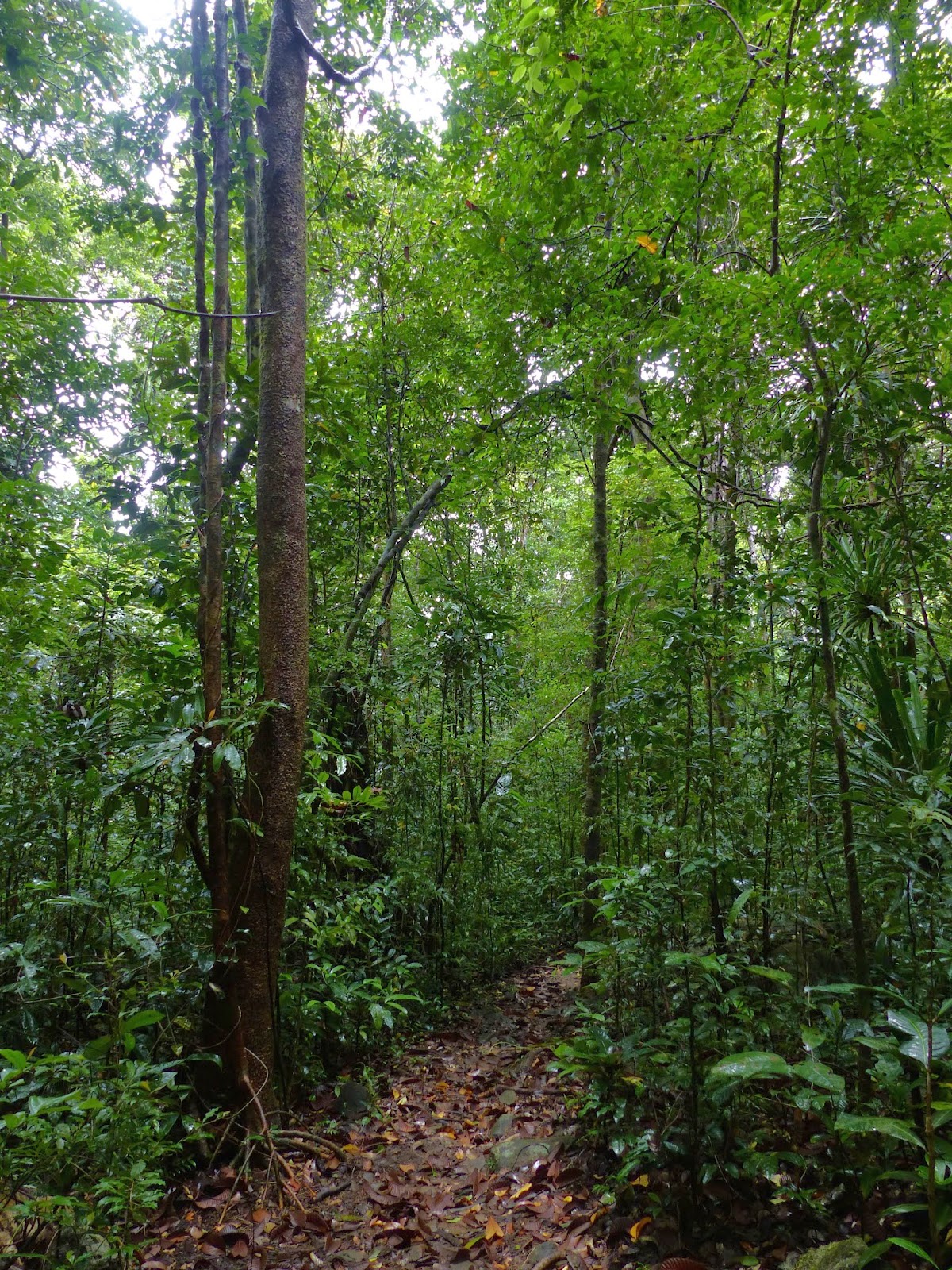
entered the primary forest, full of immense trees rising up over 20 meters and
vines dangling over our heads.

Some of the most impressive arboreal specimens take hundreds of years to grow. Rosewood, highly prized for both furniture and guitars, grows extremely slowly – many rosewood trees that we saw still looked like small bushes despite being several decades old. Although the logging and export of these trees is banned, the illegal trade in rosewood continues to flourish as the wood is shipped to China (much like the rhino horns from South Africa).
As we wandered through the
forest, we realized that we were the only tourists that had braved the
rain. Furthermore, the rain had stopped
and the animals were emerging from their hiding places. We were incredibly lucky to see Madagascar’s
largest chameleon, red-ruffed lemurs, and two crested ibis. Despite our usual indifference toward birds, Claret’s
excitement after spotting the ibis was contagious – he mentioned that we were
the first group he has been with to successfully take a picture of the fowl in
over a year.


Back at the lodge, we
savored being able to stay at the beach while also being in walking distance of
the national park. We spent the
afternoon snorkeling, although we did not encounter any of the dugongs promised
by our guidebook.


On the second night, we
were once again awakened by the sound of pouring rain pattering on the thatched
roof of our hut. In the morning, it gave
no sign of letting up and threatening white caps filled the ocean. We made the executive decision that, since we
had already trooped through the forest in the rain the day before, we didn’t
need to do so again. The other guests at
our hotel, an older group of Germans, weren’t so lucky – they had refused to
hike in the rain the day before and now it was raining even harder. Since they were also scheduled to leave the
following day, they decided to brave the weather while we spent the day
watching the downpour from the comfort of the lodge.

Having a beer and playing
with the lodge’s resident cat, Ephraim’s (skinnier) Malagasy doppelgänger, was
an enjoyable interlude to several days of strenuous hikes.
 It was also quite entertaining to watch the
Germans trudge back several hours later in the middle of the monsoon. With their clothes drenched, they then
decided that pants would be optional for the rest of the trip – the sight of the
elderly crew in their tighty whities for the next several hours was almost too
much to handle.
It was also quite entertaining to watch the
Germans trudge back several hours later in the middle of the monsoon. With their clothes drenched, they then
decided that pants would be optional for the rest of the trip – the sight of the
elderly crew in their tighty whities for the next several hours was almost too
much to handle. On our final day in
Masoala, we woke up early, crossing our fingers that the rain had let up and
the waves had died down. We were
scheduled to take the boat back to town to catch our flight, with a stop at the
island of Nosy Mangabe en route. Luckily,
both the rain and the waves had slightly dissipated. Regardless, we were in for a pretty exciting
boat trip. First, we had to clamber onto
one vessel to ferry both our luggage and us to the main boat. Even without the prior day’s torrential
downpour and accompanying wind, the waves were still quite large.
On our final day in
Masoala, we woke up early, crossing our fingers that the rain had let up and
the waves had died down. We were
scheduled to take the boat back to town to catch our flight, with a stop at the
island of Nosy Mangabe en route. Luckily,
both the rain and the waves had slightly dissipated. Regardless, we were in for a pretty exciting
boat trip. First, we had to clamber onto
one vessel to ferry both our luggage and us to the main boat. Even without the prior day’s torrential
downpour and accompanying wind, the waves were still quite large. Our small craft slowly made its way to our
destination – bobbing from the peak of each wave to the trough behind it and
occasionally rolling so much that we had to grab ahold of anything handy to
avoid tipping overboard.
Our small craft slowly made its way to our
destination – bobbing from the peak of each wave to the trough behind it and
occasionally rolling so much that we had to grab ahold of anything handy to
avoid tipping overboard.At times we questioned our captain’s skills, but we fortunately arrived safely at our destination. Nosy Mangabe is a small island and wildlife reserve off the coast, with several groups of lemurs living on site, as well as a variety of other fauna, like leaf-tailed geckos. After our exciting expedition, we were more than happy to arrive at the reserve’s beach and start exploring the forest. We found white-fronted brown lemurs, leaf-tailed geckos (all face down on the trees so as not to drown from raindrops in their nostrils), tiny green frogs, and crazy crabs.


Giorgio was also quite entranced with several
large spiders, busy weaving intricate webs – Stephanie studiously avoided all such
arachnids.
 After our brief
island-hopping expedition, we were back to the main island and the airport for
our flight back to Tana. “Airport” might
be a bit of an exaggeration for the ramshackle aerodrome de Maroantsetra.
To hold our place in line as we waited for the check-in counter to open,
we placed our ticket and passports in “line” with the other passengers’ on the
desk. When the counter did open, we
realized there were no computers and each bag tag and boarding pass was filled
out by hand. The same thing had happened
in Tulear a few days prior.
After our brief
island-hopping expedition, we were back to the main island and the airport for
our flight back to Tana. “Airport” might
be a bit of an exaggeration for the ramshackle aerodrome de Maroantsetra.
To hold our place in line as we waited for the check-in counter to open,
we placed our ticket and passports in “line” with the other passengers’ on the
desk. When the counter did open, we
realized there were no computers and each bag tag and boarding pass was filled
out by hand. The same thing had happened
in Tulear a few days prior. With no seat
assignments, it was a mad dash to board the plane when it did arrive. Also absent was any sign of security protocols
throughout this process -- who knows what people brought onto the airplane. We took this opportunity to smuggle three
large bottles of water onto the plane (take that, TSA). We had a fairly lengthy wait for our flight,
and passed the time by having a beer in the “lounge” and tracking the
aerodrome’s resident chicken through the terminal.
With no seat
assignments, it was a mad dash to board the plane when it did arrive. Also absent was any sign of security protocols
throughout this process -- who knows what people brought onto the airplane. We took this opportunity to smuggle three
large bottles of water onto the plane (take that, TSA). We had a fairly lengthy wait for our flight,
and passed the time by having a beer in the “lounge” and tracking the
aerodrome’s resident chicken through the terminal.
Arriving back in Tana, we
had just one more night in Madagascar – our flight to Johannesburg was
scheduled for Friday afternoon and our flight to New York for Saturday
evening. We stayed at the top of the
hill overlooking the city, the oldest part of the town and took in the
spectacular view from our balcony. On
our prior visit, we had been equally entranced by the views of Tana’s twelve
sacred hills from the King’s Palace in Ambohinga.


To cap off our trip, we
celebrated with dinner at Tana’s best restaurant – you really can’t beat a meal
of foie gras, zebu, and Malagasy chocolate.
Plus a nice bottle of wine and some local rum.
.JPG) We were sad to leave
Madagascar as our Malagasy vocabulary had grown to two-digit numbers. Upon arrival, we really didn’t know what to
expect – this portion of our trip was entirely different from our travels in
continental Africa. Spending the month seeing so many different parts of the vast island was incredibly rewarding and unlike any of our prior adventures in Africa or elsewhere.
We were sad to leave
Madagascar as our Malagasy vocabulary had grown to two-digit numbers. Upon arrival, we really didn’t know what to
expect – this portion of our trip was entirely different from our travels in
continental Africa. Spending the month seeing so many different parts of the vast island was incredibly rewarding and unlike any of our prior adventures in Africa or elsewhere.
Leaving the country was a stark
contrast to our arrival and all our domestic air travel. For starters, no one asked us for a
bribe. More surprising, however, was the ridiculous number of security points we had to go through. Our passports were checked at seven different
points between check-in and boarding.
Computers, cameras, and bags were thoroughly inspected at least a couple
times. No one was taking a water bottle
on a flight out of Madagascar, that’s for sure.
Impressively, the flight departed on time and we arrived in Johannesburg three hours later. There was hardly any wait for Stephanie’s
bag, which was one of the first ones out onto the carousel. As time passed and all bags were taken, Gio’s
backpack was nowhere to be found. An
attendant mentioned to us that some bags had gone missing, but “the good news
is that we think they are still in Madagascar.”
The bag was finally delivered to our hotel the next day, apparently it
was still in Johannesburg, and someone had simply placed it in the wrong
pile. Really? Really.
We are sad to leave the Dark
Continent behind but ready to tackle new adventures. We will be resting in the first world for a
week before heading out to Asia. Excited
to see all our friends in NYC (if only for little bit) and really looking
forward to our quick stop in New Orleans, followed by the most important event –
Lisa’s wedding in DC!
#stephandgio


.JPG)
.JPG)
.JPG)


